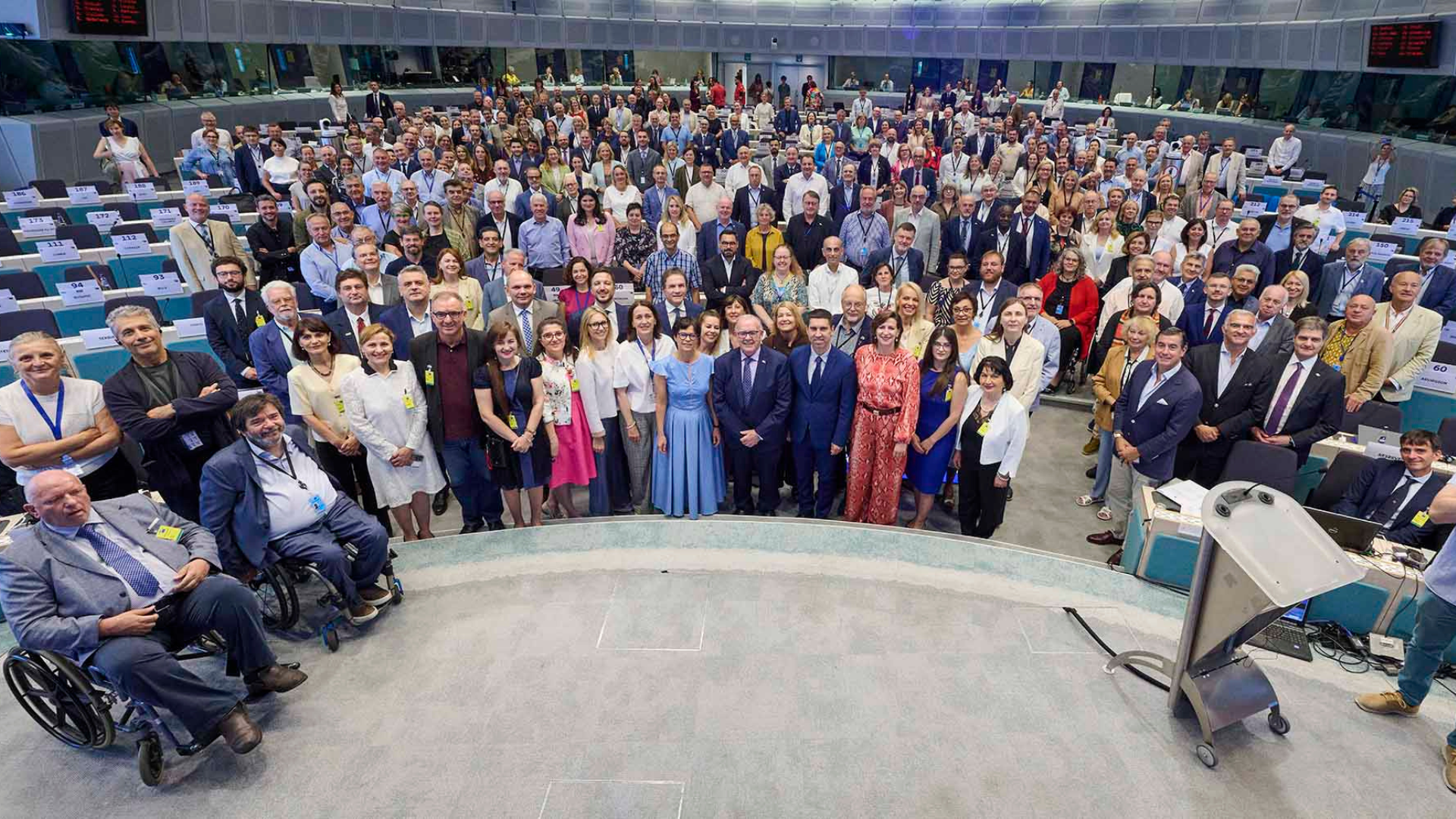

The Ukrainian Entrepreneurs Union (SUP) took part in the annual plenary discussion of the European Economic and Social Committee (EESC) on the enlargement of the European Union.
The event brought together representatives of European institutions, governments, civil society, and EU candidate countries. This year, the main focus was on how the enlargement process contributes to building a safer, more resilient, and more secure Europe.
The event was opened by Séamus Boland, President of the European Economic and Social Committee. Marta Kos, European Commissioner for Enlargement, also delivered a keynote address, emphasizing that EU enlargement remains one of the EU’s key strategic priorities. She highlighted the progress made by candidate countries, including Ukraine, and announced the opening of the sixth negotiating cluster on the path to European integration.
The EESC views enlargement as a strategic investment in a strong, secure, resilient, and democratic Europe. That is why the Committee is implementing the Enlargement Candidate Members initiative, which integrates representatives of civil society from candidate countries into the work of European institutions and engages them in shaping EU policies.
The Experience of Ukrainian Business as a Contribution to European Resilience
Kateryna Hlazkova, Executive Director of SUP, spoke on the panel “Building a Safer, More Resilient and Secure Europe,” where she presented the Ukrainian business community’s perspective on the role of entrepreneurship in strengthening national resilience during wartime.
The panel was moderated by Theona Lavrelashvili, Researcher at the Wilfried Martens Centre for European Studies.
The main speakers included:
- Mihai Popșoi, Deputy Prime Minister and Minister of Foreign Affairs of the Republic of Moldova
- David McAllister, Member of the European Parliament and Chair of the Committee on Foreign Affairs (AFET)
- Nerijus Aleksiejūnas, Permanent Representative of the Republic of Lithuania to the EU
- Ariane Rodert, EESC Rapporteur on the EU Preparedness Strategy
Representatives of candidate countries also contributed to the discussion:
- Kateryna Hlazkova, Ukrainian Entrepreneurs Union (Ukraine)
- Čedanka Andrić, Confederation of Independent Trade Unions of Serbia
- Çiğdem Nas, Economic Development Foundation (Türkiye)
- Lejla Bičakčić, Center for Investigative Reporting (Bosnia and Herzegovina)
“When we talk about security, we first and foremost think about defence. But in Ukraine, security today has a much broader meaning. It also includes cyber resilience, business continuity, the protection of employees and critical infrastructure, and companies’ ability to operate despite constant challenges,” said Kateryna Hlazkova.
According to her, over the years of the full-scale war, Ukrainian businesses have developed practical expertise in rapidly adapting to crises. In particular, according to a recent study, 58% of Ukrainian companies systematically implement Business Continuity Plans, while continuing to invest in employee protection, energy resilience, and security solutions.
European Integration Is a Two-Way Exchange of Experience
Kateryna emphasized that the European integration process should be a two-way exchange.
“EU enlargement is not only an opportunity for candidate countries to learn from European experience. It is also an opportunity for the European Union to draw on Ukraine’s practical expertise. We already have unique experience in countering hybrid threats, ensuring cyber resilience, protecting employees, and maintaining business continuity. For us, this is not theory — it is a daily reality,” she stressed.
The SUP Executive Director also highlighted the role of business in strengthening national resilience:
“In Ukraine, business today is not only an employer or a taxpayer. It is an active partner of the state and civil society, helping to maintain economic stability, support communities, and strengthen the country’s overall resilience in wartime.”
The EESC emphasizes that EU enlargement is a strategic investment in a strong, secure, and democratic Europe. The Committee is also developing the Enlargement Candidate Members initiative, which gradually integrates representatives of civil society from candidate countries into the work of European institutions and supports their preparation for membership in the European Union.