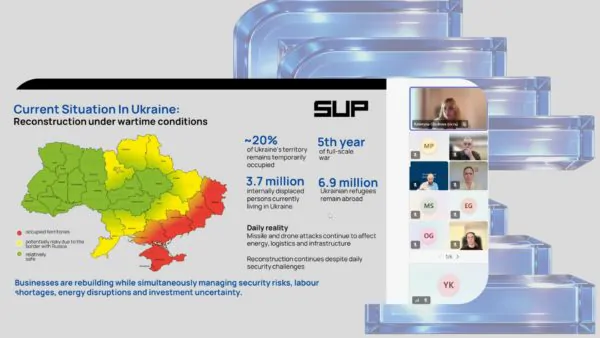
The second day of public discussions on economic policies, led by entrepreneur, public figure, and coordinator of the Economic Policy Sector, Valeriy Pekar, has concluded as part of the “Ukraine After Victory: Forming Economic Policies for Post-War Ukraine” project.
Today’s discussion focused on monetary policy and policies in the financial sector. The report by the head of the Center for Economic Strategy, Hlib Vyshlynsky, who is leading the document development on budget policy and the public sector, along with his colleague, Maksym Samoyluk, emphasized that stabilizing the macroeconomic situation and reducing military risks are prerequisites for returning to pre-war practices of financial sector regulation.
The experts also noted that in the context of war, where domestic revenues are allocated to military funding and other expenditures rely on foreign financial aid, there is a need for a balanced budget policy primarily aimed at defense financing. Additionally, the tax policy should create the right incentives and a level playing field for businesses.
The discussion on the state of affairs in the financial sector prompted a dialogue on the future direction of regulatory policies.
The discussion involved experts from the Center for Economic Strategy, including Hlib Vyshlynsky and Maksym Samoyluk, as well as Yaroslav Zhelezniak, the First Deputy Chairman of the Parliamentary Committee on Finance, Taxation, and Customs Policy, politician and public figure, and Sergiy Moskvin, Ph.D., representing the Ukrainian Association of Capital Markets.
Rostyslav Lukach, an expert in investments and securities, Andriy Dlyhach, a futurist and the head of Advanter Group, Larysa Starikova, the director of the analytical center at the Agrarian Union of Ukraine, and others also participated.
The next public discussion on economic policies will take place on May 25, focusing on human capital.
*The organization of the discussion was made possible with the support of the USAID – US Agency for International Development Program “Competitive Economy of Ukraine.” This program supports startups and small and medium-sized enterprises (SMEs) to enhance their competitiveness in the domestic and international markets, facilitates the development of a simplified and transparent business climate, and provides Ukrainian companies with opportunities to benefit from international trade advantages.
The opinions expressed by the experts do not necessarily reflect the views of the United States Agency for International Development or the United States government.