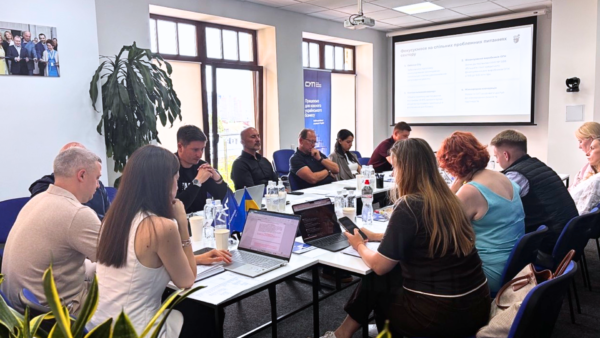
The third day of public discussions on economic policies began with a speech by Andriy Dlihach, a futurist, the chairman of Advanter Group, and the leader of the human capital document development.
The discussions revolved around the principles on which the state’s human capital policy should be based now to ensure the country’s recovery and development after the victory. Economic development is directly correlated with the development of human capital, so it is crucial to identify key demographic, cultural, educational, and social problems and find ways to address them today.
During the four-hour discussion, experts examined the development of human capital from an economic perspective, including its main components: education, culture, healthcare, and social and demographic policies.
The topics discussed on the third day included:
- Who do we consider Ukrainians: only citizens residing in the country or also those living abroad?
- Are we building an open or closed type of state? Is our society ready for the arrival of foreigners?
- How can we ensure the integration of different segments of the population into the country’s social and political life on legislative and executive levels?
- What is Ukraine’s key task: importing, retaining, or repatriating human capital?
- What should be the priority in healthcare: disease prevention and prevention or their treatment?
- What role does the state play in cultural policy: is it an arbiter, a participant, or a client?
The next public discussions on economic policies within the SUP project “Ukraine After Victory: Forming Economic Policy in Post-War Ukraine” will take place in June.
*The organization of the discussion was made possible with the support of the USAID Competitive Economy of Ukraine Program. This program supports startups and small and medium-sized enterprises (SMEs) to enhance their competitiveness in the domestic and international markets, assists in the development of a simplified and transparent business climate, and provides Ukrainian companies with opportunities to benefit from international trade advantages.
The opinions of the experts do not necessarily reflect the views of the United States Agency for International Development or the U.S. government.